



BLOG
Vacuum Membrane Press (Vacuum Press): What It Is and What It’s Used For

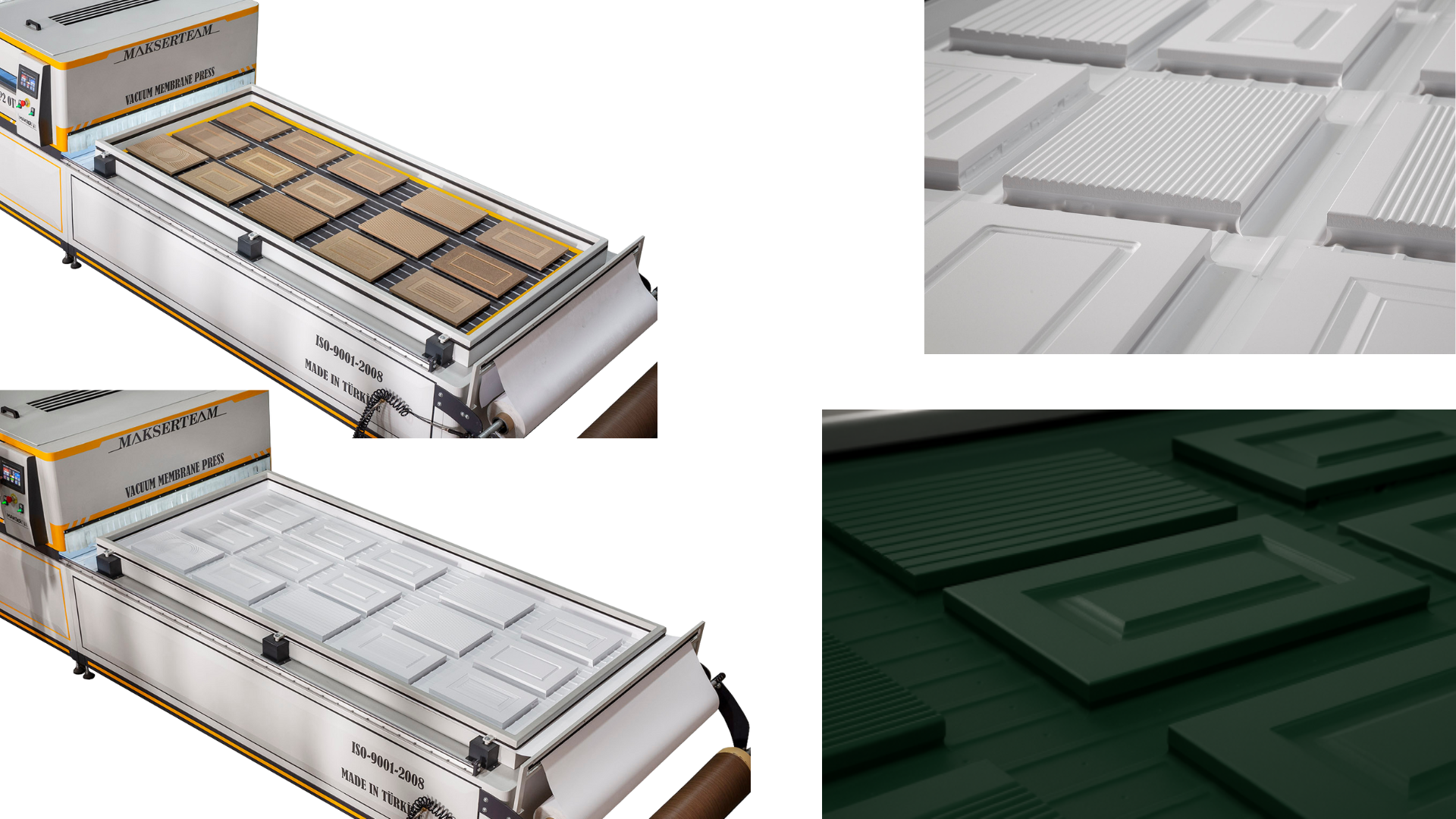
Vacuum Membrane Press (Vacuum Press): What It Is and What It’s Used For
In furniture and interior door manufacturing, one of the most talked-about technologies in recent years is the
vacuum membrane press (often called a vacuum press). From kitchen cabinets and bathroom vanities to TV units,
wardrobes, interior room doors, and decorative wall panels, vacuum pressing is a core method for producing
membrane-wrapped doors and 3D wrapped panel surfaces.
In this guide, you’ll learn:
What Is a Vacuum Membrane Press?
A vacuum membrane press is a machine that wraps and bonds surface materials onto panel substrates such as
MDF (medium-density fiberboard),
HDF, and particleboard/MFC using heat and vacuum pressure. The process can be done in:
- 2D (flat) lamination, and
- 3D (profile-following) wrapping on routed, grooved, carved, or raised surfaces.
Unlike classic flat presses, a vacuum membrane press can fully cover:
- Routed and profiled door fronts
- Grooves, bevels, and decorative details
- Edge returns (edge wrap) in a single operation
That’s why it’s considered the foundation technology for membrane cabinet doors, 3D decorative panels,
and many interior door panel designs.
Why a Vacuum Press Matters for 3D Surfaces
A vacuum press is especially valuable when the surface is not flat. When the vacuum is applied, the foil or veneer
is pulled tightly into every detail of the panel, producing a clean, uniform finish—provided that temperature,
vacuum strength, adhesive, and cooling are correctly managed.

Covering Materials Used with a Vacuum Membrane Press
A vacuum membrane press machine is not limited to one covering type. The most common materials include:
PVC Foil (Vinyl Foil) for Vacuum Press Wrapping
PVC foil is the most widely used covering
material in many furniture markets. It offers a huge range of finishes such as:
- Matte, semi-matte, glossy, and high-gloss options
- Wood grains, solid colors, stone/marble looks
- Modern and classic design compatibility
For many manufacturers, the combination of vacuum membrane press + PVC foil has become the standard for
kitchen fronts, bathroom doors, and decorative panels.
PET / PETG Foil for High-Gloss and Surface Performance
PET and PETG foils are typically chosen when higher gloss or specific surface performance is required. When the
panel preparation and vacuum press parameters are correct, PET/PETG may offer advantages in areas like
visual clarity and certain durability expectations.
Learn more about PETG as a material here:
PETG (polyethylene terephthalate glycol).
Natural Wood Veneer with a Vacuum Membrane Press
For premium products where real wood texture and authenticity matter, natural wood veneer
is a strong option. Vacuum membrane pressing can be used for:
- Custom-designed cabinet doors
- Interior room doors
- Decorative wall and ceiling panels
Veneer applications often benefit from membrane-assisted pressing (depending on the system and the project),
especially when handling delicate surfaces and complex shapes.
How a Vacuum Membrane Press Works (in 4 Steps)
To get consistent results in membrane doors and 3D wrapped panels, the process must follow a correct sequence.
Here is a practical 4-step overview of a vacuum membrane press cycle:
1) Foil (or Veneer) Placement
Cabinet doors, panels, or door skins are arranged on the press table. The chosen foil/veneer is laid over the parts
with enough coverage to include edge returns. On membrane systems, the silicone/rubber membrane is positioned
to meet the foil from above.
Correct foil placement helps to:
- Reduce foil waste
- Minimize wrinkles and trapped air pockets
- Improve cycle efficiency
2) Heating
The frame closes and the heating hood moves into position. The foil and panel surface are heated to the correct
temperature for the selected material. The goal is to soften the foil enough to form into the profile and allow the
adhesive to reach the right working state.
A high-quality vacuum membrane press typically includes:
- Full-length heating elements for uniform heat distribution
- Accurate surface temperature sensing (not just air temperature)
Uneven heat is one of the most common sources of edge lifting, surface waves, and gloss/tonal differences.
3) Vacuum Forming / Wrapping
Once target temperature is reached, the system switches to vacuum mode. Air is pulled from beneath the table,
and the foil tightly wraps the panel—following the 3D shape and routed details.
For deep routed designs and interior door panels, strong and stable vacuum performance is essential. If vacuum
power is insufficient, you may see:
- Air bubbles
- Poor seating in corners and grooves
- Delamination or lifting over time
If you want the general principle behind this kind of forming, see:
vacuum forming.
4) Cooling and Unloading
After wrapping is complete, parts should cool in a controlled way before unloading. Removing parts too early can
cause excessive shrink, stress on the edges, and future tension-related issues.
When the cycle is done, the press opens, excess foil is trimmed, and the product moves to final inspection and packaging.
With correct recipes and stable settings, a vacuum membrane press delivers lower scrap rates, more consistent quality,
and shorter, repeatable cycle times.
Where a Vacuum Membrane Press Is Used
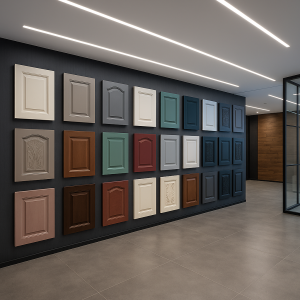
A vacuum press is not tied to just one product category. It’s used anywhere you need to wrap a 2D or 3D panel
surface cleanly and consistently.
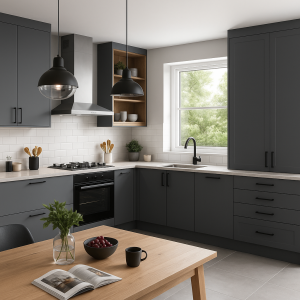
Kitchen and Bathroom Furniture
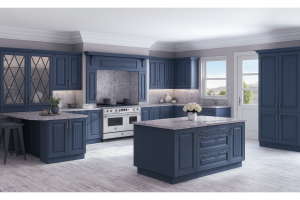
- Kitchen cabinet doors and drawer fronts
- Bathroom vanity doors
- Pantry and service cabinet fronts
- Niche panels and decorative under-cabinet panels
Bedrooms, Youth Rooms, and Kids’ Rooms
- Wardrobe doors
- Nightstand and dresser fronts
- Panel-style headboards
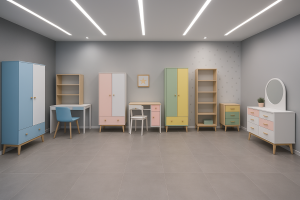
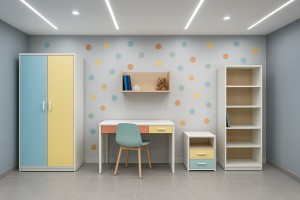
- Colorful or patterned cabinet panels for kids’ furniture
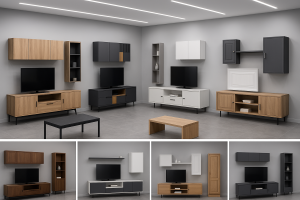
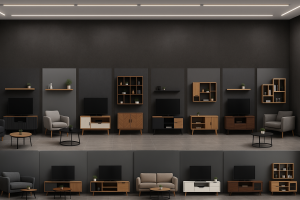
Living Rooms, TV Units, and Feature Walls
- TV units and TV back panels
- Console and display cabinet fronts
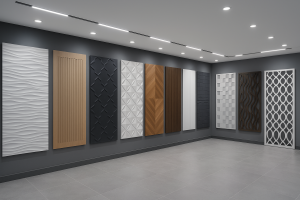
- Decorative wall panels
- Shelf and niche panels
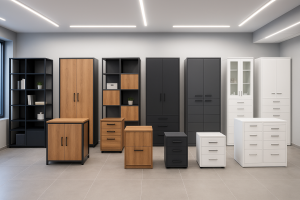
Office and Healthcare Furniture
- File and archive cabinet doors
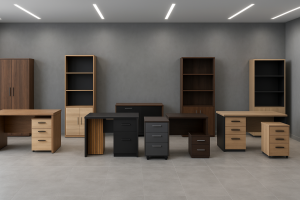
- Office storage units and workstations
- Hospital room cabinets
- Bedside units and medicine cabinet fronts

Interior Doors and Architectural Elements
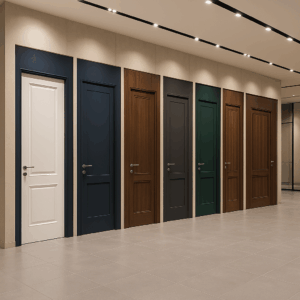
- Interior room doors (routed, grooved, classic, modern, curved)
- Door panels and decorative skins
- Column cladding and 3D architectural surfaces
- Hotel, retail, and office decorative panel projects
In short: if a panel has a profile or 3D detail and you want a wrapped finish with foil or veneer, a
vacuum membrane press is one of the most effective production methods.
Press Table Size vs. PVC Foil Width: Choosing the Right Vacuum Press
A common mistake when investing in a vacuum membrane press is assuming “the biggest table is always best.”
In reality, table size directly affects:
- PVC foil consumption
- Material waste
- Energy usage
- Cycle planning and production speed
Common PVC Foil Widths: 1.20 m and 1.40 m
In many markets, PVC foils are commonly supplied in practical widths like 1.20 m and 1.40 m.
Because of this, selecting a table width that matches your primary foil width can significantly reduce offcuts.
If you mainly run 1.40 m foil, a 1.40 m table width is often the most efficient starting point (depending on your edge return needs).
Example: 2.80 m Kitchen Crown / Pelmet Panel
Let’s say you produce a decorative kitchen crown/pelmet panel that is 2.80 m long and you need the foil to wrap
over the edges. In that case, a strict 2.80 m internal working length is usually not enough.
To allow for edge return and comfortable placement, an internal working length of at least:
- 2.90 m (minimum), or
- 2.95 m (preferred)
This reduces forced placement, improves edge forming, and lowers scrap risk.
Foil Slitting Strategy for Door Manufacturers
Many door manufacturers slit a 1.40 m PVC foil roll into narrower widths (for example 90 cm) for door faces,
then use the remaining strips for profiles, trims, or other wrapping systems.
If your production model includes slitting and reusing foil strips, selecting the vacuum press table size based on your cutting plan
can significantly improve overall line efficiency.
Vacuum Membrane Press Buying Guide: What to Look For
Choosing the right vacuum membrane press machine impacts both long-term quality and production cost.
Here are key areas to evaluate:
Heating System and Temperature Control
- Does the machine provide uniform heating across the entire table?
- Are there reliable surface temperature sensors that reflect real working conditions?
Heat imbalance is a primary cause of edge lifting, surface waviness, and visible tone differences.
Vacuum Power and Stability
- Is the vacuum pump capacity suitable for your deepest routed designs?
- Is there a reservoir tank (or an equivalent system) to keep vacuum level stable?
Insufficient vacuum is one of the fastest ways to create bubbles, corner issues, and early failures—especially on 3D profiles.
Membrane vs. Membrane-Free Operation
Many manufacturers prefer membrane-free (direct vacuum) operation for standard PVC foil work.
A membrane is often used more in:
- Natural veneer projects
- Special/custom jobs
- Applications requiring added process control
A vacuum membrane press that supports both modes adds flexibility for mixed production.
Automation and Recipe Management
- Can you save recipes for different foil/panel combinations?
- Can operators recall the same program with one button for repeat jobs?
Recipe-based control makes quality far more repeatable—even when operators change.
Service, Training, and Process Support
Machine build quality matters, but long-term success also depends on support. During installation and ramp-up,
good suppliers typically help with:
- Adhesive application methods
- Panel preparation (especially MDF density and surface readiness)
- Foil/veneer selection and compatible settings
- Vacuum press parameter setup and troubleshooting
Strong onboarding and process guidance can save months of trial-and-error—and prevent recurring defects.
Conclusion: Reliable Membrane Doors and 3D Wrapped Panels with the Right Vacuum Press
To summarize, a vacuum membrane press (vacuum press) is a central technology for producing membrane cabinet doors,
interior door panels, and decorative 3D wrapped surfaces used across:
- Kitchens and bathrooms
- Bedrooms and kids’ furniture
- TV units and living areas
- Office and healthcare furniture
- Interior doors and architectural panel projects
When you combine:
- Proper panel preparation (often with high-quality MDF)
- Correct adhesive quality and application technique
- The right covering choice (PVC, PET/PETG, natural veneer)
- A well-matched vacuum press (table size, heating, vacuum power, automation)
…you can produce durable, aesthetically clean, repeatable-quality parts with lower waste and fewer edge-lifting problems.
Vacuum Membrane Press FAQ
Is a vacuum membrane press only for cabinet doors?
No. It’s widely used for decorative panels, TV units, wall panels, interior doors, and any profiled surfaces that need a wrapped finish.
What causes bubbles or poor corner forming?
Common causes include insufficient vacuum strength, uneven heating, incorrect adhesive application, or poor panel preparation.